

Harvard University Press
 Capital and Ideology449,-529,A New York Times BestsellerAn NPR Best Book of the YearThe epic successor to one of the most important books of the century: at once a retelling of global history, a scathing critique of contemporary politics, and a bold proposal for a new and fairer economic system. Thomas Piketty’s bestselling Capital in the Twenty-First Century galvanized global debate about inequality. In this audacious follow-up, Piketty challenges us to revolutionize how we think about politics, ideology, and history.He exposes the ideas that have sustained inequality for the past millennium, reveals why the shallow politics of right and left are failing us today, and outlines the structure of a fairer economic system. Our economy, Piketty observes, is not a natural fact. Markets, profits, and capital are all historical constructs that depend on choices.Piketty explores the material and ideological interactions of conflicting social groups that have given us slavery, serfdom, colonialism, communism, and hypercapitalism, shaping the lives of billions. He concludes that the great driver of human progress over the centuries has been the struggle for equality and education and not, as often argued, the assertion of property rights or the pursuit of stability. The new era of extreme inequality that has derailed that progress since the 1980s, he shows, is partly a reaction against communism, but it is also the fruit of ignorance, intellectual specialization, and our drift toward the dead-end politics of identity.Once we understand this, we can begin to envision a more balanced approach to economics and politics. Piketty argues for a new “participatory” socialism, a system founded on an ideology of equality, social property, education, and the sharing of knowledge and power. Capital and Ideology is destined to be one of the indispensable books of our time, a work that will not only help us understand the world, but that will change it.Published: August 31, 2026 04:51Harvard University PressBøker
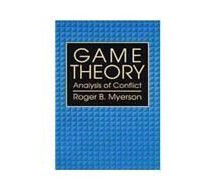 Game Theory – Analysis of Conflict (Paper) (OISC) Analysis of Conflict529,-599,Eminently suited to classroom use as well as individual study, Roger Myerson's introductory text provides a clear and thorough examination of the models, solution concepts, results, and methodological principles of noncooperative and cooperative game theory. Myerson introduces, clarifies, and synthesizes the extraordinary advances made in the subject over the past fifteen years, presents an overview of decision theory, and comprehensively reviews the development of the fundamental models: games in extensive form and strategic form, and Bayesian games with incomplete information. Game Theory will be useful for students at the graduate level in economics, political science, operations research, and applied mathematics.Everyone who uses game theory in research will find this book essential.Published: August 31, 2026 04:51Harvard University PressBøker
 Sources of the Self – The Making of the Modern Identity (Paper) The Making of the Modern Identity429,-529,Taylor shows that the modern turn inward is not disastrous but is in fact the result of our long efforts to define and reach the good. At the heart of this definition he finds the affirmation of ordinary life, a value that has decisively if not completely replaced an older conception of reason as connected to a hierarchy based on birth and wealth.Published: August 31, 2026 04:51Harvard University PressBøker
 Capital in the Twenty–First Century429,-529,The main driver of inequality-returns on capital that exceed the rate of economic growth-is again threatening to generate extreme discontent and undermine democratic values. Thomas Piketty's findings in this ambitious, original, rigorous work will transform debate and set the agenda for the next generation of thought about wealth and inequality.Published: August 31, 2026 04:51Harvard University PressBøker
 The Guests of Ants – How Myrmecophiles Interact with Their Hosts How Myrmecophiles Interact with Their Hosts749,-0,A fascinating examination of socially parasitic invaders, from butterflies to bacteria, that survive and thrive by exploiting the communication systems of ant colonies. Down below, on sidewalks, in fallen leaves, and across the forest floor, a covert invasion is taking place. Ant colonies, revered and studied for their complex collective behaviors, are being infiltrated by tiny organisms called myrmecophiles. Using incredibly sophisticated tactics, various species of butterflies, beetles, crickets, spiders, fungi, and bacteria insert themselves into ant colonies and decode the colonies’ communication system. Once able to “speak the language,” these outsiders can masquerade as ants. Suddenly colony members can no longer distinguish friend from foe. Pulitzer Prize–winning author and biologist Bert Hölldobler and behavioral ecologist Christina L. Kwapich explore this remarkable phenomenon, showing how myrmecophiles manage their feat of code-breaking and go on to exploit colony resources. Some myrmecophiles slip themselves into their hosts’ food sharing system, stealing liquid nutrition normally exchanged between ant nestmates. Other intruders use specialized organs and glandular secretions to entice ants or calm their aggression. Guiding readers through key experiments and observations, Hölldobler and Kwapich reveal a universe of behavioral mechanisms by which myrmecophiles turn ants into unwilling servants. As The Guests of Ants makes clear, symbiosis in ant societies can sometimes be mutualistic, but, in most cases, these foreign intruders exhibit amazingly diverse modes of parasitism. Like other unwelcome guests, many of these myrmecophiles both disrupt and depend on their host, making for an uneasy coexistence that nonetheless plays an important role in the balance of nature.Published: August 27, 2026 04:51Harvard University PressBøker
 Command in War449,-0,Many books have been written about strategy, tactics, and great commanders. This is the first book to deal exclusively with the nature of command itself, and to trace its development over two thousand years from ancient Greece to Vietnam. It treats historically the whole variety of problems involved in commanding armies, including staff organization and administration, communications methods and technologies, weaponry, and logistics.And it analyzes the relationship between these problems and military strategy. In vivid descriptions of key battles and campaigns—among others, Napoleon at Jena, Moltke’s Königgrätz campaign, the Arab–Israeli war of 1973, and the Americans in Vietnam—Martin van Creveld focuses on the means of command and shows how those means worked in practice. He finds that technological advances such as the railroad, breech-loading rifles, the telegraph and later the radio, tanks, and helicopters all brought commanders not only new tactical possibilities but also new limitations.Although vast changes have occurred in military thinking and technology, the one constant has been an endless search for certainty—certainty about the state and intentions of the enemy’s forces; certainty about the manifold factors that together constitute the environment in which war is fought, from the weather and terrain to radioactivity and the presence of chemical warfare agents; and certainty about the state, intentions, and activities of one’s own forces. The book concludes that progress in command has usually been achieved less by employing more advanced technologies than by finding ways to transcend the limitations of existing ones.Published: August 27, 2026 04:51Harvard University PressBøker
 Chinese History, Volume 2 – A New Manual, Enlarged Sixth Edition (Fiftieth Anniversary Edition)499,-0,The sixth edition of Chinese History: A New Manual, revised and expanded to two volumes, includes the latest developments in digital tools and the ancillary disciplines essential for work on Chinese history. Volume 1 covers topics ranging from Language to Technology. Volume 2 presents primary and secondary sources chronologically by period.Published: August 27, 2026 04:51Harvard University PressBøker
 A Secular Age899,-0,A New York Times Notable Book of the YearA Times Literary Supplement Book of the YearA Globe and Mail Best Book of the YearA Publishers Weekly Best Book of the YearA Tablet Best Book of the YearWinner of a Christianity Today Book Award“One finds big nuggets of insight, useful to almost anybody with an interest in the progress of human society.” —The EconomistWhat does it mean to say that we live in a secular age? Almost everyone would agree that we—in the West, at least—largely do. And clearly the place of religion in our societies has changed profoundly in the last few centuries. In what will be a defining book for our time, Charles Taylor takes up the question of what these changes mean—of what, precisely, happens when a society in which it is virtually impossible not to believe in God becomes one in which faith, even for the staunchest believer, is only one human possibility among others. Taylor, long one of our most insightful thinkers on such questions, offers a historical perspective. He examines the development in “Western Christendom” of those aspects of modernity which we call secular. What he describes is in fact not a single, continuous transformation, but a series of new departures, in which earlier forms of religious life have been dissolved or destabilized and new ones have been created. As we see here, today’s secular world is characterized not by an absence of religion—although in some societies religious belief and practice have markedly declined—but rather by the continuing multiplication of new options, religious, spiritual, and anti-religious, which individuals and groups seize on in order to make sense of their lives and give shape to their spiritual aspirations. What this means for the world—including the new forms of collective religious life it encourages, with their tendency to a mass mobilization that breeds violence—is what Charles Taylor grapples with, in a book as timely as it is timeless.Published: August 27, 2026 04:51Harvard University PressBøker