Duke University Press Black Friday 2025 » Beste tilbud Black Week
Duke University Press
Finn de beste Black Friday-tilbudene fra Duke University Press
Sylvia Wynter
399,-
0,
<DIV>The Jamaican writer and cultural theorist Sylvia Wynter is best known for her diverse writings that pull together insights from theories in history, literature, science, and black studies, to explore race, the legacy of colonialism, and representations of humanness. <I>Sylvia Wynter: On Being Human as Praxis</I> is a critical genealogy of Wynter’s work, highlighting her insights on how race, location, and time together inform what it means to be human. The contributors explore Wynter’s stunning reconceptualization of the human in relation to concepts of blackness, modernity, urban space, the Caribbean, science studies, migratory politics, and the interconnectedness of creative and theoretical resistances. The collection includes an extensive conversation between Sylvia Wynter and Katherine McKittrick that delineates Wynter’s engagement with writers such as Frantz Fanon, W. E. B. DuBois, and AimÉ CÉsaire, among others; the interview also reveals the ever-extending range and power of Wynter’s intellectual project, and elucidates her attempts to rehistoricize humanness as praxis.</DIV>
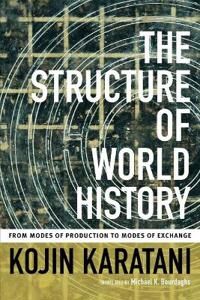
<DIV>In this major, paradigm-shifting work, Kojin Karatani systematically re-reads Marx's version of world history, shifting the focus of critique from modes of production to modes of exchange. Karatani seeks to understand both Capital-Nation-State, the interlocking system that is the dominant form of modern global society, and the possibilities for superseding it. In <I>The Structure of World History</I>, he traces different modes of exchange, including the pooling of resources that characterizes nomadic tribes, the gift exchange systems developed after the adoption of fixed-settlement agriculture, the exchange of obedience for protection that arises with the emergence of the state, the commodity exchanges that characterize capitalism, and, finally, a future mode of exchange based on the return of gift exchange, albeit modified for the contemporary moment. He argues that this final stage-marking the overcoming of capital, nation, and state-is best understood in light of Kant's writings on eternal peace. <I>The Structure of World History</I> is in many ways the capstone of Karatani's brilliant career, yet it also signals new directions in his thought.</DIV>
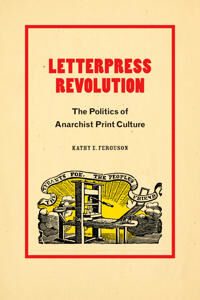
While the stock image of the anarchist as a masked bomber or brick thrower prevails in the public eye, a more representative figure should be a printer at a printing press. In <I>Letterpress Revolution</I>, Kathy E. Ferguson explores the importance of printers, whose materials galvanized anarchist movements across the United States and Great Britain from the late nineteenth century to the 1940s. Ferguson shows how printers-whether working at presses in homes, offices, or community centers-arranged text, ink, images, graphic markers, and blank space within the architecture of the page. Printers' extensive correspondence with fellow anarchists and the radical ideas they published created dynamic and entangled networks that brought the decentralized anarchist movements together. Printers and presses did more than report on the movement; they were constitutive of it, and their vitality in anarchist communities helps explain anarchism’s remarkable persistence in the face of continuous harassment, arrest, assault, deportation, and exile. By inquiring into the political, material, and aesthetic practices of anarchist print culture, Ferguson points to possible methods for cultivating contemporary political resistance.
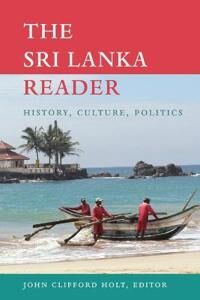
<DIV><I>The Sri Lanka Reader</I> is a sweeping introduction to the epic history of the island nation located just off the southern tip of India. The island’s recorded history of more than two and a half millennia encompasses waves of immigration from the South Asian subcontinent, the formation of Sinhala Buddhist and Tamil Hindu civilizations, the arrival of Arab Muslim traders, and European colonization by the Portuguese, then the Dutch, and finally the British. Selected texts depict perceptions of the country’s multiple linguistic and religious communities, as well as its political travails after independence in 1948, especially the ethnic violence that recurred from the 1950s until 2009, when the Liberation Tigers of Tamil Eelam were defeated by the Sri Lankan government’s armed forces. This wide-ranging anthology covers the aboriginal Veddhas, the earliest known inhabitants of the island; the Kings of Kandy, Sri Lanka’s last indigenous dynasty; twenty-first-century women who leave the island to work as housemaids in the Middle East; the forty thousand Sri Lankans killed by the tsunami in December 2004; and, through cutting-edge journalism and heart-wrenching poetry, the protracted violence that has scarred the country’s contemporary political history. Along with fifty-four images of paintings, sculptures, and architecture, <I>The Sri Lanka Reader</I> includes more than ninety classic and contemporary texts written by Sri Lankans and foreigners.</DIV>